Food & Concentration
Carbohydrate-Rich Lunches and the Afternoon Concentration Pattern
Tobias Ashcroft · 3 February 2026 · 10 min
Somewhere between twelve and two, a pattern asserts itself across offices and workspaces throughout the country. A meal is consumed — sometimes at a desk, sometimes in a canteen, sometimes on a walk — and within an hour, the afternoon's capacity for sustained attention begins its familiar decline. The question the journal has been tracing is not whether this pattern exists, but what role the pace of eating plays in shaping it.
Most attention directed at post-meal energy patterns focuses on what is eaten — the composition of the plate, its macronutrient balance, its glycaemic profile. Relatively less attention is paid to how that food is consumed. This is a notable gap in the popular conversation around food and afternoon alertness, because the pace of eating appears to be a consistent variable across a range of published nutritional observations.
Published dietary studies have consistently noted that the rate at which food is consumed influences the body's digestive response. A meal consumed in under ten minutes presents a different set of demands on the digestive process than the same meal eaten over twenty-five to thirty minutes. The distinction is not merely mechanical. The body's signalling around satiety, around the sense of having eaten, unfolds over time — and when a meal is completed before those signals have had a chance to fully register, the post-meal period can carry a particular quality of unresolved demand.
This observation is not unique to any single study. It appears, with varying degrees of specificity, across the nutritional research literature covering eating pace and post-meal experience. What is less often reported is the downstream effect on the afternoon hours: how the pace of a midday meal shapes not just the immediate post-lunch window, but the two to three hours that follow it.

The working lunch occupies a peculiar position in the daily rhythm. It is, in most professional environments, the meal with the least dedicated time. Breakfast can be extended on slower mornings; dinner is rarely rushed by an imminent return to desk work. But lunch — particularly for those working in offices, on site, or in roles with defined schedules — is often compressed to whatever gap appears between commitments.
The result is a meal that is frequently consumed at pace, often while attending to other things: screens, messages, conversations that could not wait. The act of eating becomes secondary to its surroundings, and the practical consequence of this is a shortened window of genuine engagement with food — an engagement that, the evidence suggests, shapes what comes after.
Field observation conducted informally by the editorial team across a range of London working environments in the autumn of 2025 suggested that the average active lunch break — defined as time spent eating without concurrent screen or task engagement — was considerably shorter than the notional break length. Many workers reported finishing a meal in under fifteen minutes while remaining, in practical terms, at work.
"A meal consumed in under ten minutes presents a different set of demands on the digestive process than the same meal eaten over twenty-five to thirty minutes. The distinction is not merely mechanical."
The nutritional research around eating pace and post-meal energy is not uniform in its conclusions, and the journal does not present it as such. What the evidence consistently observes, across multiple study populations and contexts, is that meals eaten at a measured pace — with attention directed toward the food itself, rather than split between eating and concurrent tasks — are associated with a more settled post-meal period.
Protein-rich lunches consumed slowly contribute to a steady afternoon energy rhythm. Whole grains eaten at a measured pace support sustained focus after eating. These associations are not causes in the simple sense, and the research does not always distinguish clearly between the effects of pace and the effects of food type. What it does suggest, repeatedly, is that the how of eating is not independent of the what.
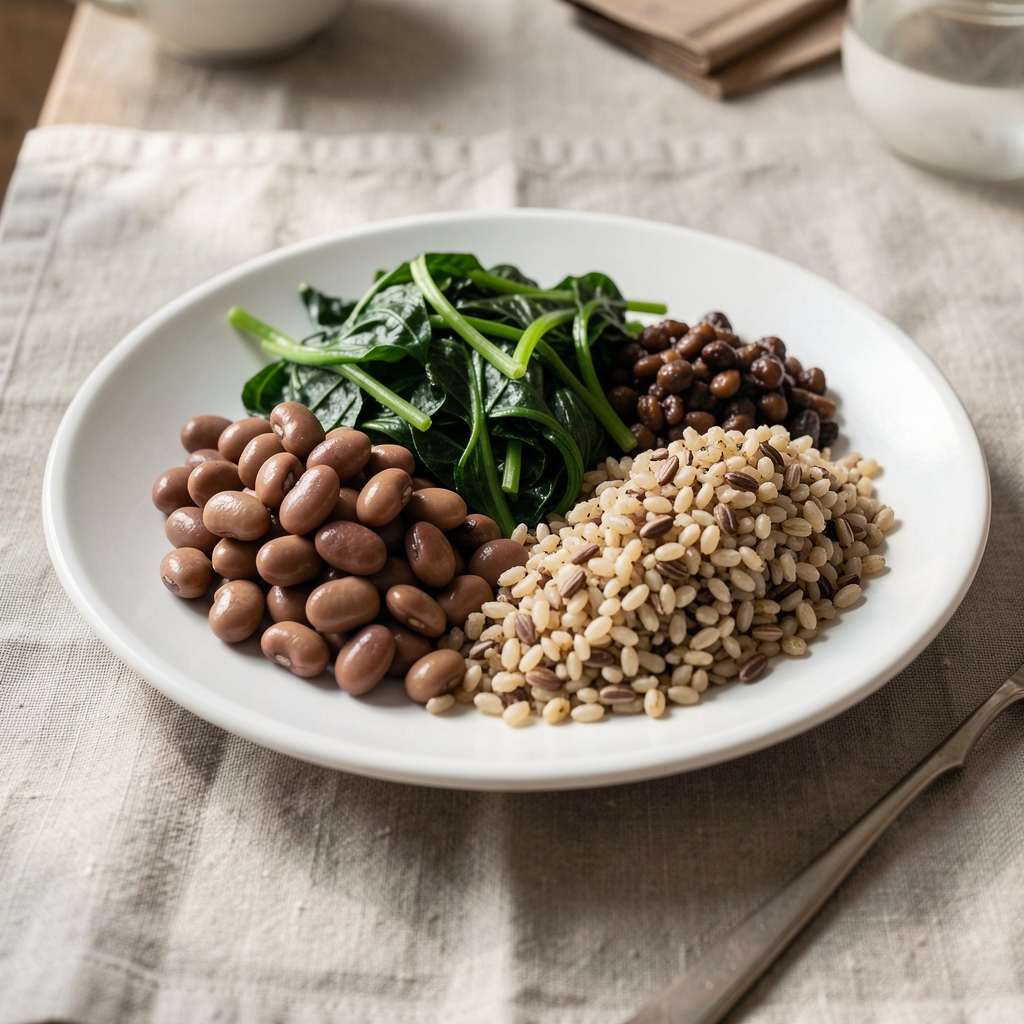
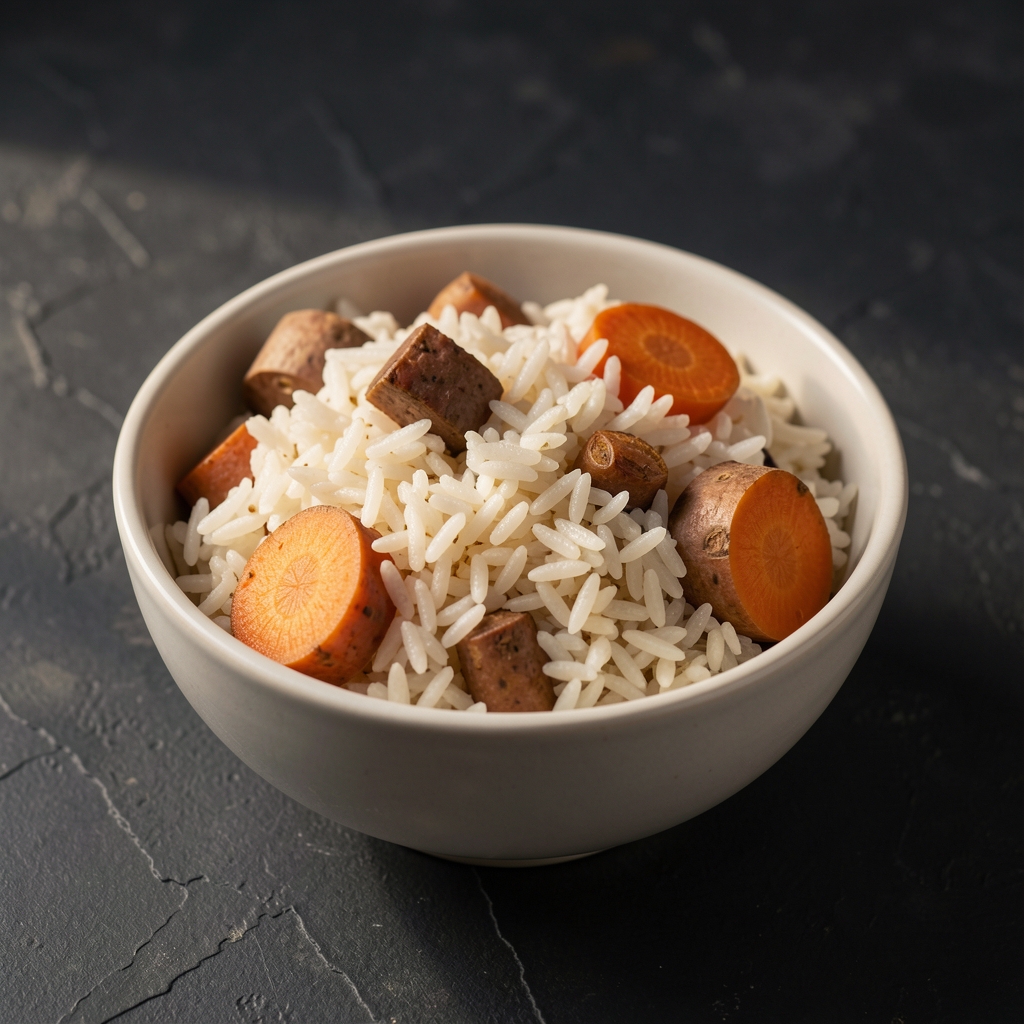
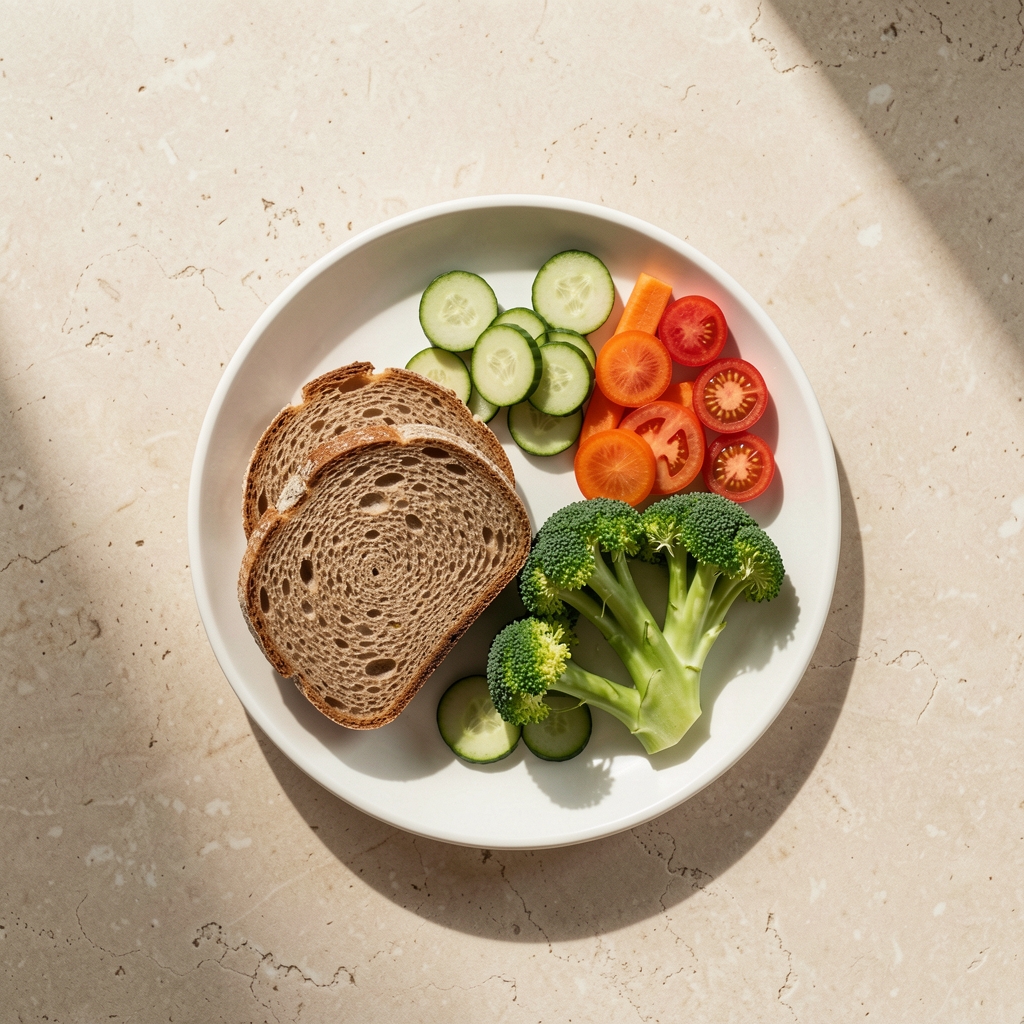
For those tracking their own midday food habits, the observation is worth noting: the same bowl of mixed grains and vegetables, eaten slowly at a cleared table, tends to produce a different afternoon than the same bowl consumed at speed over a keyboard. The difference is not dramatic in any individual instance. Over the course of a working week, it accumulates.
The two hours following a midday meal represent a period in which the body's resources are directed partly toward the digestive process. This is not a pathological response — it is the ordinary functioning of a system managing a significant intake of food and beginning the work of processing it. The degree to which this process draws on attentional resources appears to vary with the volume and composition of the meal, and — more subtly — with the pace at which it was eaten.
Slow digestion and a corresponding sense of heaviness are commonly reported following large, rapidly consumed meals. The pattern is noted in nutritional research and is familiar to most working adults from direct experience. What is less frequently examined is whether this heaviness is inherent to the food itself, or whether a portion of it is attributable to the pace at which that food was consumed.
The journal's position is that the question remains open, and that the working adult has more practical access to changing the pace of eating than to reformulating the available lunch options in any given environment. The pace variable, in other words, is one of the more accessible aspects of the midday eating rhythm — and one of the least attended to.
This piece does not constitute guidance on how a working adult should eat their lunch. It is an editorial observation on a pattern that the published nutritional literature and the journal's own field notes both point toward. The pattern is this: pace shapes the post-meal period, and the post-meal period shapes the afternoon.
The implication for anyone interested in their own afternoon food routine is not that they must eat slowly, or that they should reorganise their working day to accommodate a longer lunch. It is simply that the pace at which a meal is eaten is a variable, and variables can be observed. Observation, in the journal's view, precedes any useful change — and the act of noticing what happens after a rushed lunch, compared to what happens after a quiet one, is itself a form of evidence worth collecting.
The afternoon's quality of attention is shaped by more factors than any single variable can account for. Sleep, workload, task complexity, and individual variation all play roles the journal continues to document. But the rhythm of the midday meal — its pace, its setting, the degree to which the act of eating is the primary activity for the duration — appears with enough consistency in the evidence to warrant sustained attention. The journal will continue to trace it.
Eleanor Whitfield is the primary editor of Spilo Journal. Her work focuses on the patterns that emerge when ordinary eating habits are examined with editorial rigour rather than dietary guideline. She has covered the intersection of food writing and everyday lifestyle observation for eight years.