Eating Rhythm
The Rhythm of a Rushed Midday Meal and What It Leaves Behind
Eleanor Whitfield · 12 January 2026 · 9 min

The post-lunch dip in concentration is so commonly reported — and so widely experienced — that it has acquired a near-folkloric status in the culture of office work. It is spoken of as an inevitability: a natural consequence of having eaten, full stop. The published nutritional research suggests a more specific picture, one in which the composition of the meal — and in particular its carbohydrate content — plays a notable role in shaping what the hour between two and three o'clock actually feels like.
When nutritional researchers refer to carbohydrate-rich lunches in the context of afternoon alertness, they are not describing all carbohydrate-containing meals equally. The relevant variable is typically the load — the volume of rapidly digestible starch consumed in a single sitting — rather than the presence of carbohydrates as a category. A bowl of white rice, a large portion of pasta, a bread-heavy sandwich: these represent relatively high-load meals in the sense that the research tends to examine.
The distinction matters because popular accounts of the lunch-alertness relationship often reduce it to "carbs make you sleepy" — a formulation that the research does not fully support, and that can obscure the more nuanced pattern the evidence actually describes. It is not the presence of carbohydrate at lunch that associates with reduced afternoon concentration in the published literature; it is the volume, the speed of absorption, and the meal's overall composition — including the presence or absence of protein and fibre — that shape the post-meal energy experience.
This distinction has practical implications for how one understands the afternoon concentration pattern. A midday meal that includes a significant carbohydrate load alongside protein and fibre is a different proposition — in terms of its post-meal profile — than the same carbohydrate load consumed without those accompanying components. The research notes this difference consistently, even where the overall caloric content of the two meals is similar.

Published nutritional observations on post-meal alertness span several decades and a range of study designs. The pattern that emerges across them is consistent in its general shape, if variable in its specifics: a high-carbohydrate midday meal, particularly one consumed in a large quantity and without significant protein or fibre, is associated in multiple studies with a greater degree of post-meal drowsiness and a more pronounced afternoon reduction in attention performance compared to lighter or more compositionally balanced meals.
The mechanisms proposed in the research literature to account for this pattern are several. One involves the glycaemic response: a rapidly digestible carbohydrate load produces a relatively rapid rise in blood glucose, followed by the corresponding regulatory response. The rate and amplitude of this exchange varies between individuals and is influenced by factors including the overall composition of the meal and the individual's metabolic context. What the research observes — across varied populations — is that the pattern of high load followed by a more notable afternoon energy dip appears with regularity.
A second proposed factor involves tryptophan, an amino acid present in many carbohydrate-heavy foods and implicated in the production of serotonin. The relationship between tryptophan uptake, carbohydrate intake, and subsequent drowsiness is noted in the nutritional research literature, though its role in the post-lunch concentration pattern is described differently across studies. The journal notes it here as an observed association rather than a confirmed causal mechanism.
"It is not the presence of carbohydrate at lunch that associates with reduced afternoon concentration in the published literature; it is the volume, the speed of absorption, and the meal's overall composition that shape the post-meal energy experience."
Meal size and afternoon performance are more closely related in the evidence than is commonly acknowledged. Several nutritional studies specifically examining meal size at midday report that the volume of food consumed — independent of its macronutrient composition — is associated with the degree of post-meal drowsiness. A large meal, regardless of whether it is predominantly starch, protein, or a mixture, tends to be followed by a more pronounced period of reduced attentiveness than a smaller one.
When a large meal is also carbohydrate-dominant, the two effects appear to combine. The field notes assembled by the Spilo editorial team during informal observation of London working lunches in autumn 2025 reflected this pattern: workers who reported the most pronounced afternoon energy dips consistently described meals that were both large in volume and starch-heavy in composition. Those who reported steadier afternoons described either smaller portions, more compositionally varied plates, or both.
The editorial team does not present these field observations as a formal study. They are notes from a limited sample in a specific context. But they align with the broader pattern the published research describes, and they are included here because they illustrate the way in which the research findings map onto the texture of an ordinary working lunch in a way that is recognisable and specific.
The nutritional research on balanced midday meals and afternoon concentration does not provide a prescriptive formula — and the journal does not reproduce it as such. What the evidence consistently notes is that meals containing a mix of macronutrients tend to produce a more measured post-meal energy pattern than those dominated by a single category, and that the inclusion of fibre and protein alongside carbohydrate appears to moderate the steepness of the post-meal energy curve.
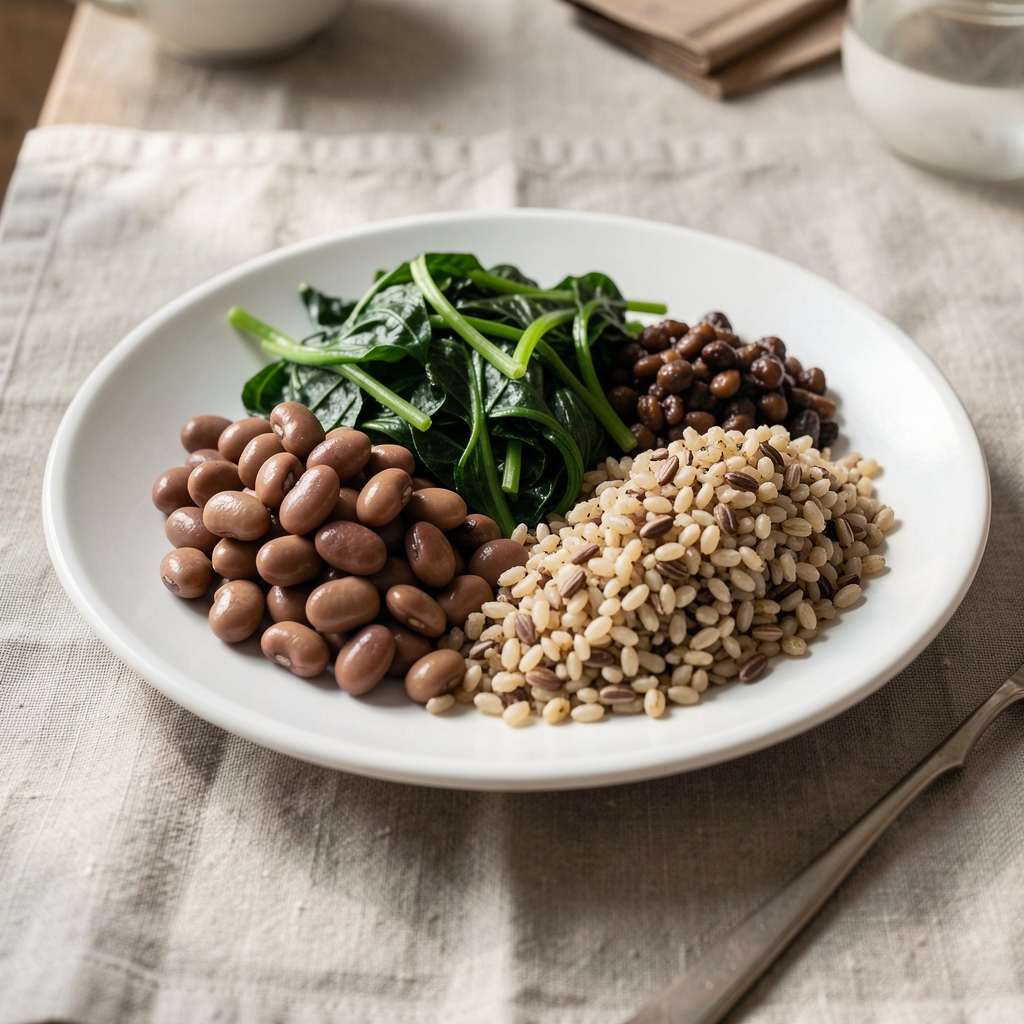
Practically speaking, the research suggests that a midday meal including legumes, leafy greens, eggs, or fish alongside a moderate carbohydrate portion may produce a different afternoon than a pasta dish of similar caloric value consumed without those accompanying elements. The difference is observed across multiple studies and in varied cultural food contexts, which lends the pattern a degree of cross-contextual consistency that the journal finds worth noting.
Again: the journal records the observation rather than drawing conclusions for any individual reader. The variation between people in how they experience post-meal energy is substantial, and neither the published research nor the editorial team's field notes can account for that variation fully. What the evidence offers is a direction — a general pattern — not a set of instructions.
The post-lunch dip in alertness is not simply a consequence of eating. It is shaped by the composition of what was eaten, the volume of the meal, the pace at which it was consumed, and the individual's broader daily rhythm. The carbohydrate load of the midday meal is one of the more consistently observed contributors to the pattern, but it operates within a field of other variables — and the journal's ongoing documentation of these variables reflects that complexity.
What this article offers is not a solution to the afternoon slump. It is an account of one of the variables that the published nutritional research identifies as contributing to it. The carbohydrate content of the lunch — its quantity, its composition, and its accompanying nutritional context — appears with sufficient regularity in the evidence to warrant documentation as a factor worth attending to.
The journal will continue to examine the other variables — eating pace, meal size, food choices and concentration — in subsequent pieces. This article is one piece of a larger observational record, not a complete account of a complex phenomenon.

Tobias Ashcroft is a contributing editor at Spilo Journal with a background in nutritional science writing. He contributes long-form pieces examining the published literature on carbohydrate intake, protein balance, and their observed relationship to afternoon concentration and attentiveness.